Letters that mould identity and knowledge that span generations
Tradition
A the art of know-how that stands the test of time
From the earth comes form
Ceramics
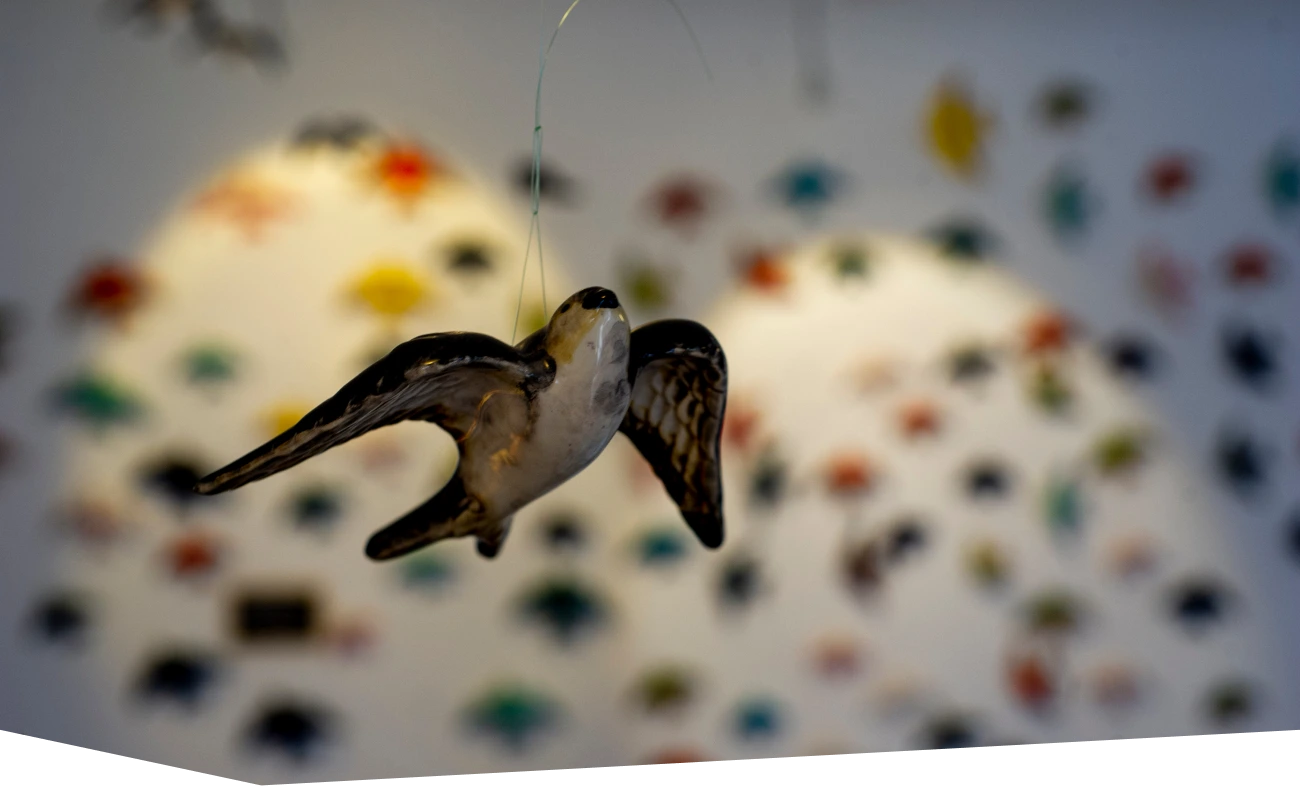
It's the art that Rafael Bordalo Pinheiro turned into the city's greatest symbol.
Ceramics combine tradition, creativity and irreverence. It combines utility, artistic expression and humour in unique pieces.
It is kept alive through the work of masters and workshops who mould red clay, naturalistic earthenware and contemporary creations, reinforcing a heritage that is recognised both inside and outside Portugal.
The humour of tradition
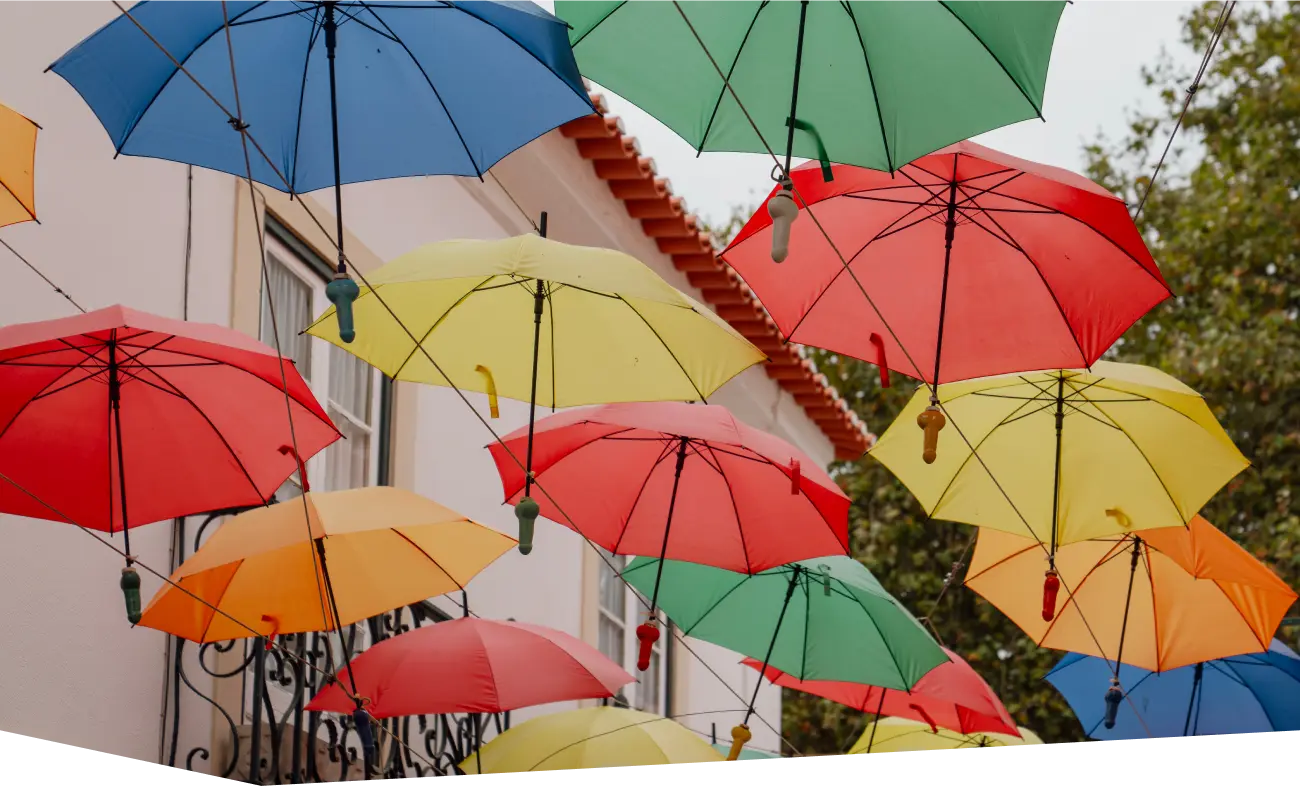
Falos
The phallic tradition in Caldas da Rainha has ancient origins, with references dating back to the reigns of King Luís and King Carlos and as far back as the 3rd century Roman emperor Heliogabalus. Carlos and as far back as the 3rd century, with the Roman emperor Heliogabalus. These pieces take different forms, from ceramic figures to the well-known bottles and mugs, and were once sold on the sly in Praça da Fruta.
Despite having been a discreet tradition for a long time, phalluses remain in the collective imagination and have gained new visibility with initiatives such as the Confraternity of Priapus and creations by contemporary artists, including large-scale pieces. Today they are recognised as an identity tradition of the city, with cultural, commercial and tourist potential.
Lines that tell stories
Embroidery
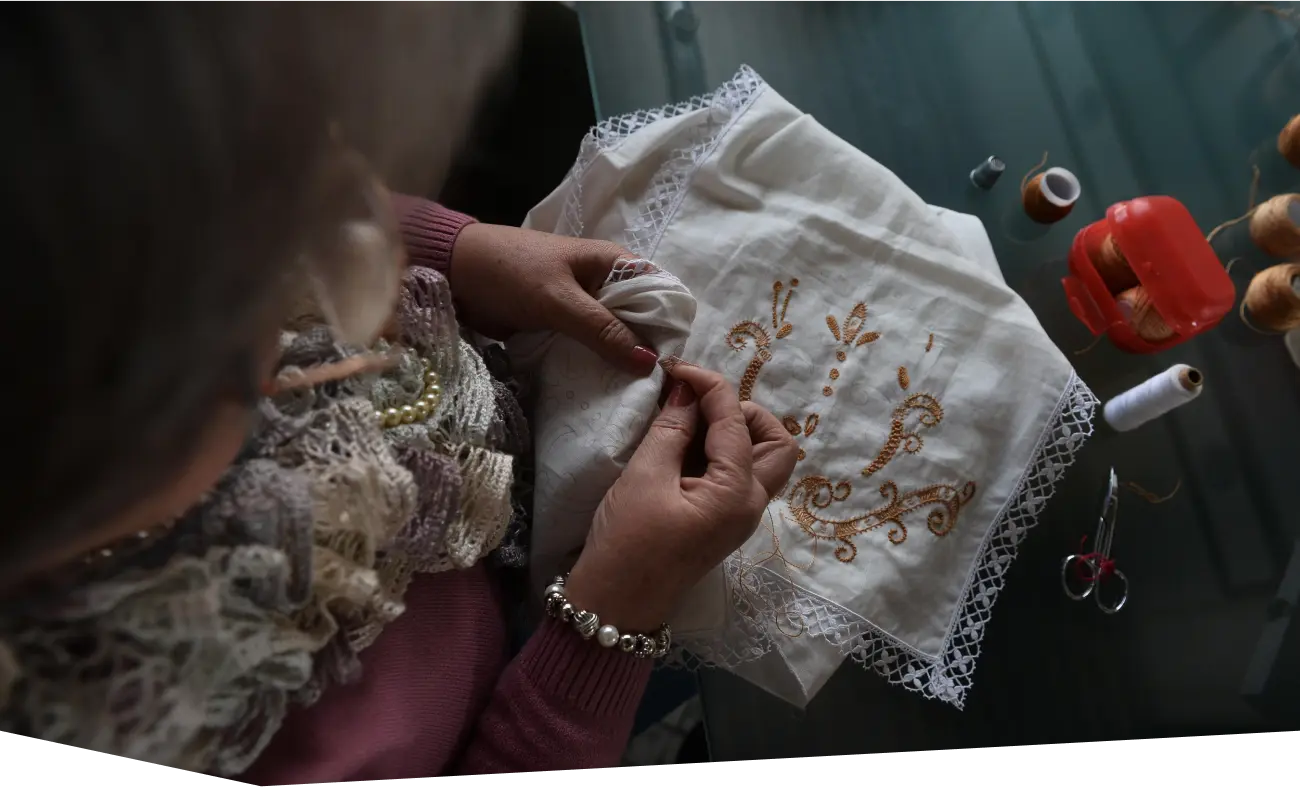
Caldas embroidery is characterised by its original motifs and rich colours, transforming lines into unique patterns. With its characteristic faces, scrolls and colours, it stands out from conventional flowers and is an artisanal expression that preserves ancient techniques and values local identity.
The story goes that embroidery emerged under the influence of Queen Leonor and her maids, inspired by royal motifs. They are distinguished by their golden thread and intricate designs. Although today there are fewer and fewer embroiderers, the dedication of the Caldas Embroidery Association keeps this knowledge alive, passing it down from generation to generation.
The brilliance of mastery
Cutlery
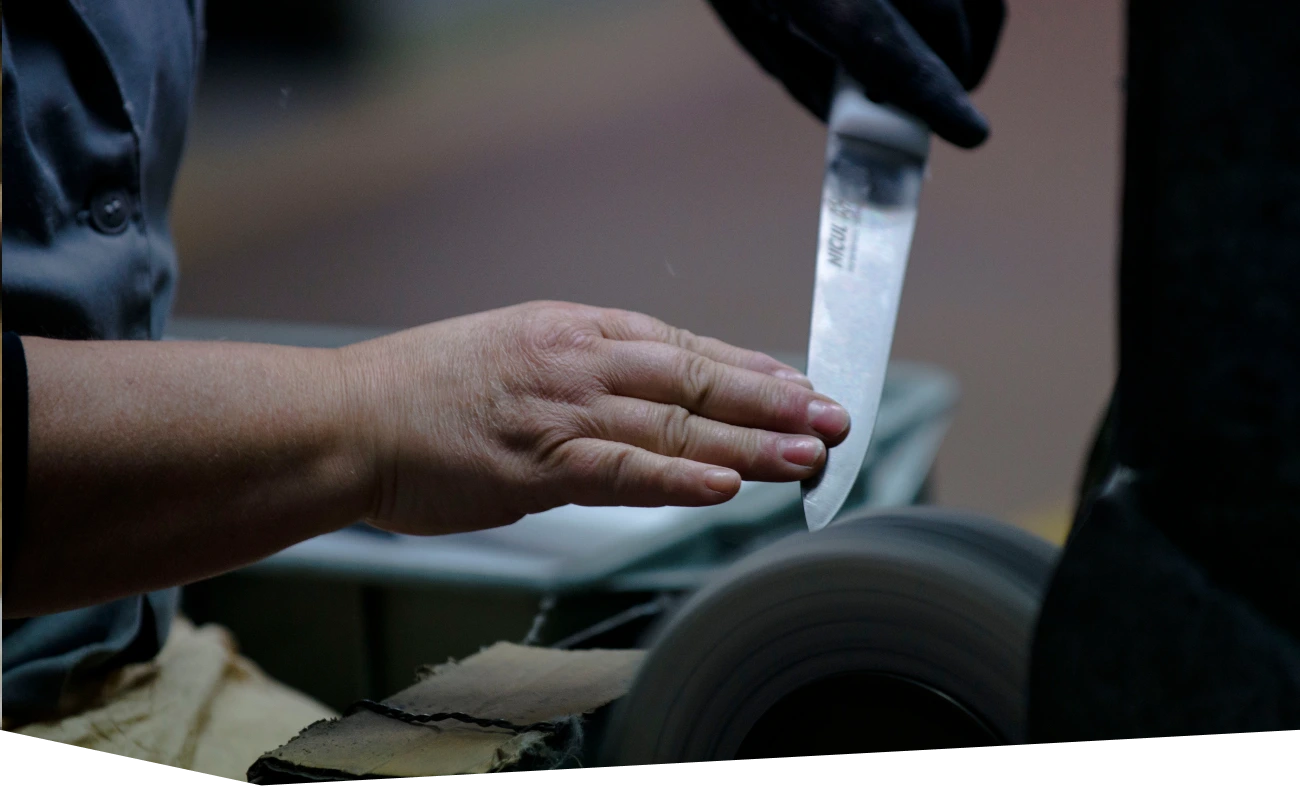
Caldas da Rainha's cutlery is one of its most prestigious expressions. The heritage of the craft is present in both artisanal and designer production, as well as in industry, and the centre in the parishes of Santa Catarina (Caldas da Rainha) and Benedita (Alcobaça) is one of the world's leading clusters in the sector.
In the field of handmade cutlery, names such as Lombo do Ferreiro and Paulo Tuna - The Bladesmith stand out, creating pieces chosen by top chefs and restaurants across Europe.
Events such as the Militaris Fair, the Cutlery Congress and the dynamic Taming of the Shrew reinforce this legacy, showcasing the best that the region has to offer and combining tradition, gastronomy and innovation.
Flavours with a memory
Sweets that makes
part of our
tradition
Sweets which is part of our tradition
Caldas da Rainha's convent sweets reflect centuries of know-how passed down from generation to generation. Beijinhos, cavacas, trouxas de ovos and pastéis de Bordalo are symbols of identity and collective memory that continue to sweeten the city.
A delicate version of cavacas, Beijinhos das Caldas are small hollow sweets, crunchy and light, covered in a sugar syrup flavoured with lemon. When they fall apart in your mouth, they reveal the softness that has made them a traditional presence in local pastry shops and part of the city's sweet identity.
The city's emblematic sweet, cavacas originated in the parish of S. Gregório at the hands of the sisters Rosalina and Gertrudes Carlota. After leaving the Court, they began making these delicacies, which quickly became a symbol of Caldas da Rainha and continue to mark festivals and celebrations today.
A convent confectionery of ancient origin, Trouxas de Ovos are made with egg yolks and sugar, rolled up and drizzled with sweet syrup. Renowned for their intense and delicate flavour, they remain a reference in Caldas da Rainha's pastry shops and an integral part of its gastronomic tradition.
A sweet recently created as an identity mark for the city, Pastéis Bordallo combine chickpeas, goat's and cow's cheeses, lemon and cinnamon in a creamy filling wrapped in thin pastry. Developed by the Business Association of Caldas da Rainha and Oeste, it is already present in local pastry shops as a symbol of innovation rooted in tradition.
The Pelicano pastry is a jewel in Caldas da Rainha's traditional sweets. Made with a thin, crunchy pastry that surrounds a delicate filling of almonds, sugar and eggs, it reveals a soft, enveloping flavour reminiscent of Portuguese conventual sweets. A sweet that celebrates the memory and authentic flavour of Caldas tradition.
A delicate version of cavacas, Beijinhos das Caldas are small hollow sweets, crunchy and light, covered in a sugar syrup flavoured with lemon. When they fall apart in your mouth, they reveal the softness that has made them a traditional presence in local pastry shops and part of the city's sweet identity.
The city's emblematic sweet, cavacas originated in the parish of S. Gregório at the hands of the sisters Rosalina and Gertrudes Carlota. After leaving the Court, they began making these delicacies, which quickly became a symbol of Caldas da Rainha and continue to mark festivals and celebrations today.
A convent confectionery of ancient origin, Trouxas de Ovos are made with egg yolks and sugar, rolled up and drizzled with sweet syrup. Renowned for their intense and delicate flavour, they remain a reference in Caldas da Rainha's pastry shops and an integral part of its gastronomic tradition.
A sweet recently created as an identity mark for the city, Pastéis Bordallo combine chickpeas, goat's and cow's cheeses, lemon and cinnamon in a creamy filling wrapped in thin pastry. Developed by the Business Association of Caldas da Rainha and Oeste, it is already present in local pastry shops as a symbol of innovation rooted in tradition.
The Pelicano pastry is a jewel in Caldas da Rainha's traditional sweets. Made with a thin, crunchy pastry that surrounds a delicate filling of almonds, sugar and eggs, it reveals a soft, enveloping flavour reminiscent of Portuguese conventual sweets. A sweet that celebrates the memory and authentic flavour of Caldas tradition.